The September release calendar has arrived, packed with heavy-hitters like Hollow Knight: Silksong and Borderlands 4. Yet, the industry surrounding these blockbusters feels less certain than ever. Following a turbulent period of layoffs and market corrections in 2024, game development studios—from tiny indies to massive AAA powerhouses—are navigating a landscape defined by cautious strategy and a renewed focus on what players actually want. The message is clear: the era of “bigger is always better” might finally be over.
The AAA Blockbuster Sputters
For years, the industry followed a predictable path: sequels, remakes, and huge new IPs were announced with massive marketing campaigns. But recent high-profile flops like Sony’s live-service shooter Concord and the disappointing reception of titles like Starfield show that a massive budget no longer guarantees a blockbuster hit.
Instead, the trend for AAA studios in 2025 is to play it safe, relying on established franchises to drive revenue. Expect to see more live-service models built around existing IPs, as seen with Microsoft’s push to get the Call of Duty catalog onto Game Pass. The high cost of game development and market uncertainty is driving a risk-averse mentality, making it harder for truly fresh ideas to break through at the top end of the market.
Indie Games Shine by Going Small
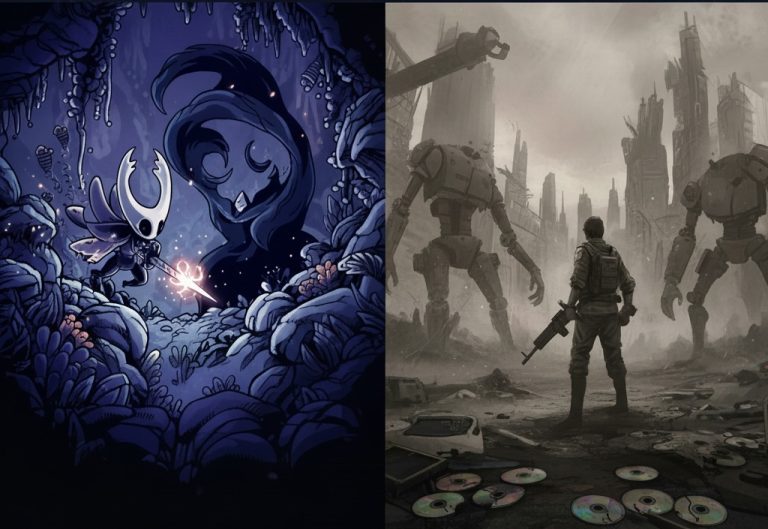
While AAA games struggle with inflated expectations, the indie scene is quietly thriving by embracing a “do more with less” philosophy. Developers are focusing on smaller, more polished experiences and revisiting classic formulas. The long-awaited release of Hollow Knight: Silksong is a prime example. The Metroidvania sequel, which caused internet chaos with its prolonged development, arrives this month to high anticipation, built on a foundation of refined core mechanics rather than technical spectacle.
This trend towards focused, mid-tier development was a key theme at Gamescom 2025. Devs are using new engines like Unreal Engine 5 and AI tools not to create vast, empty worlds, but to build and iterate on smaller, high-quality titles more efficiently. The success of this approach is being recognized by players who now often prioritize a game’s individual merits over its budget.
AI’s Role: Co-pilot, Not Creator
The conversation around AI has matured significantly since the hype cycle of 2022. Rather than being seen as an artist replacement, generative AI is being adopted as a specialized tool to boost efficiency. Studios are using it to generate assets, accelerate QA testing, and craft more realistic and reactive non-player character (NPC) dialogue, as seen in previews for games using Nvidia ACE.
However, the technology’s integration is not without ethical debate among creators, and adoption is far from universal. The consensus seems to be that while AI can function as a valuable co-pilot, human writers and designers remain essential for crafting the emotionally resonant narratives and cohesive experiences that players crave.
The Community Craves Connection
Amid all the industry flux, the fundamental appeal of gaming remains unchanged. Player data consistently shows that people play to unwind, escape, and, most importantly, connect with others. This is why social-focused and co-op experiences are seeing continued growth. Whether it’s the chaotic cooperative gameplay of a new looter-shooter or the community-driven events in an evergreen title like Sea of Thieves, games are evolving into dynamic social spaces.
This trend extends beyond simple multiplayer modes. User-generated content platforms like Roblox and Fortnite Creative continue to thrive, giving players the tools to build their own experiences and fostering strong, creative communities. Even more ambitious projects are on the horizon, with developers exploring concepts that enable deeper user creativity and ownership.
The Road Ahead
The gaming landscape of 2025 reflects an industry that is both growing and readjusting. While the economic headwinds remain a factor, game developers are proving agile and adaptable. By embracing smaller, more polished designs and leveraging new technology responsibly, they are focusing on creating the kind of meaningful, community-driven experiences that will define the future of play. The months ahead will be shaped not just by the titles released, but by the innovative—and often cautious—strategies that brought them to market.